Roof, window, and storm leaks can soak ceilings, insulation, and walls quickly. Move belongings out of the way, catch drips in containers, and take photos before anything is cleaned up. Then call for water removal and drying before the moisture spreads.
Key takeaways
- Move furniture and valuables away from the leak
- Catch drips and protect floors
- Photograph damage for your insurer
- Schedule drying before moisture spreads
Why roof and storm leaks cause outsized damage
A roof leak rarely stays where it starts. Water enters through a small opening, runs along rafters and insulation, and appears somewhere else entirely, often as a stain on a ceiling several feet away. By the time it shows up, the attic insulation, framing, and drywall are usually already wet. During a major storm, many buildings leak at once, and repair crews and restoration teams get busy, so a clear plan helps you protect your home while you wait.

Common causes of roof and storm leaks
- Damaged or missing shingles: Wind, hail, and age loosen or remove roofing materials.
- Failed flashing: Metal around chimneys, vents, skylights, and walls can crack or separate.
- Clogged gutters and drains: Water backs up and spills into the roof edge or walls.
- Ice dams: Ice at the roof edge traps melting snow and forces water under shingles.
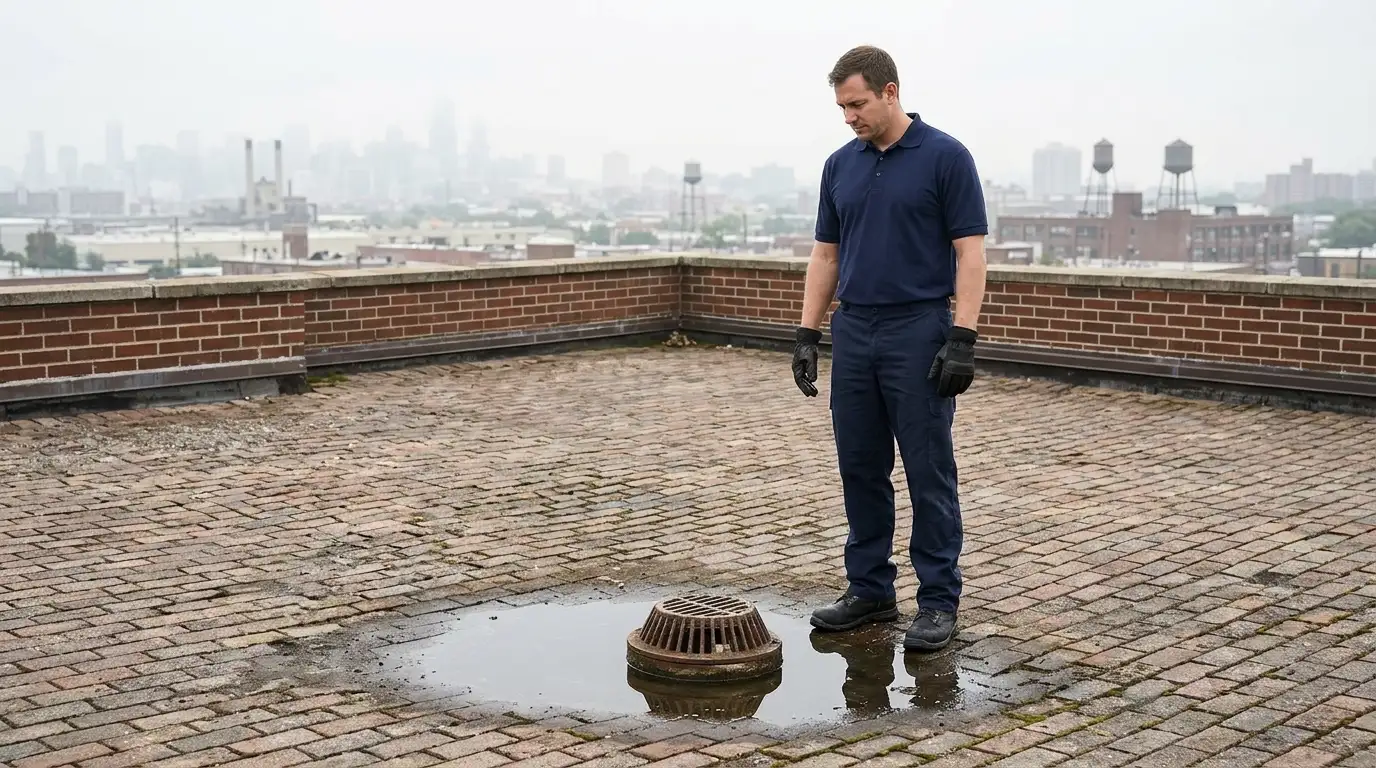
- Flat roof ponding: Water collects on flat roofs, which are common on older Hoboken buildings, and works through seams and membranes.
- Aging roof membranes: Older materials crack, blister, and lose waterproofing.
- Windows and skylights: Failed seals and caulk allow wind-driven rain inside.
- Storm debris: Branches and objects can puncture roofs and break windows.
Signs of a roof leak
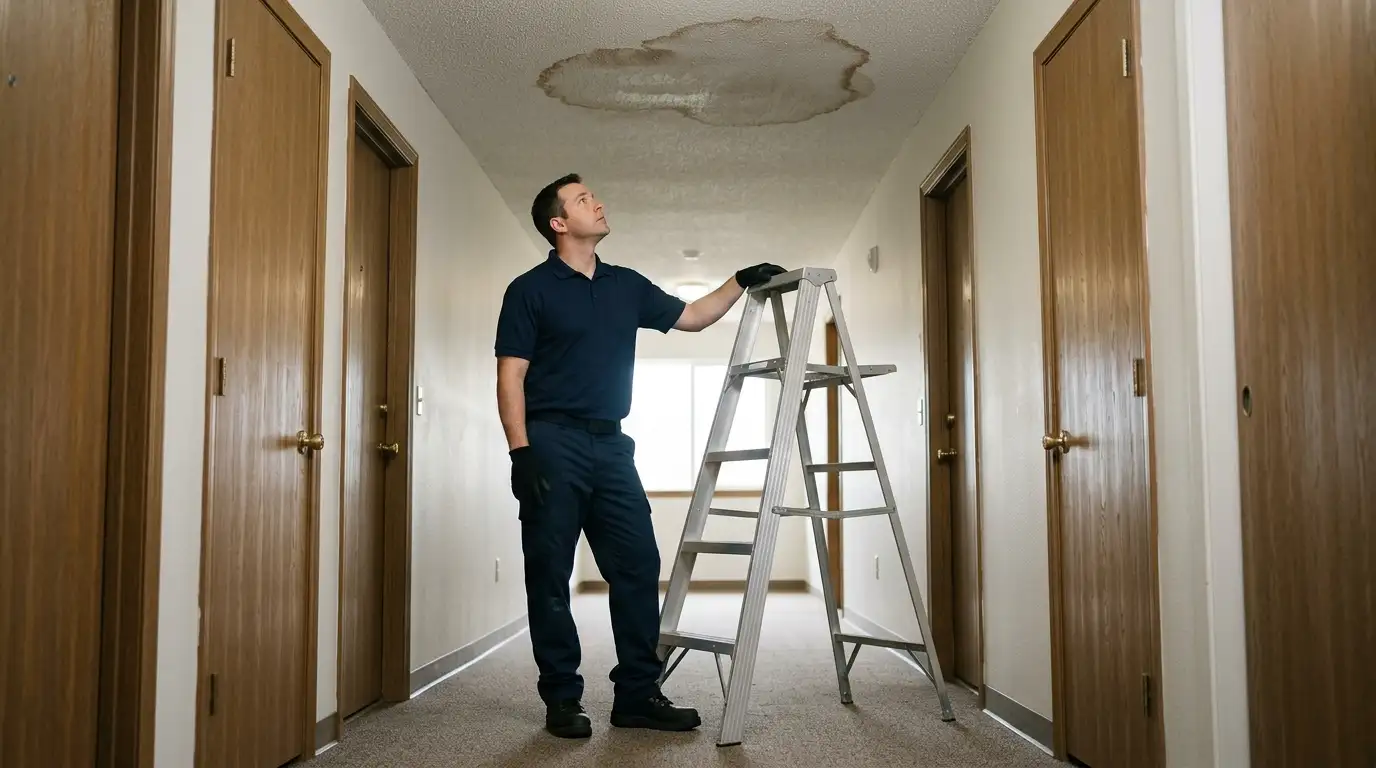
- Brown or yellow ceiling stains that grow after rain
- Dripping water or damp spots on walls and ceilings
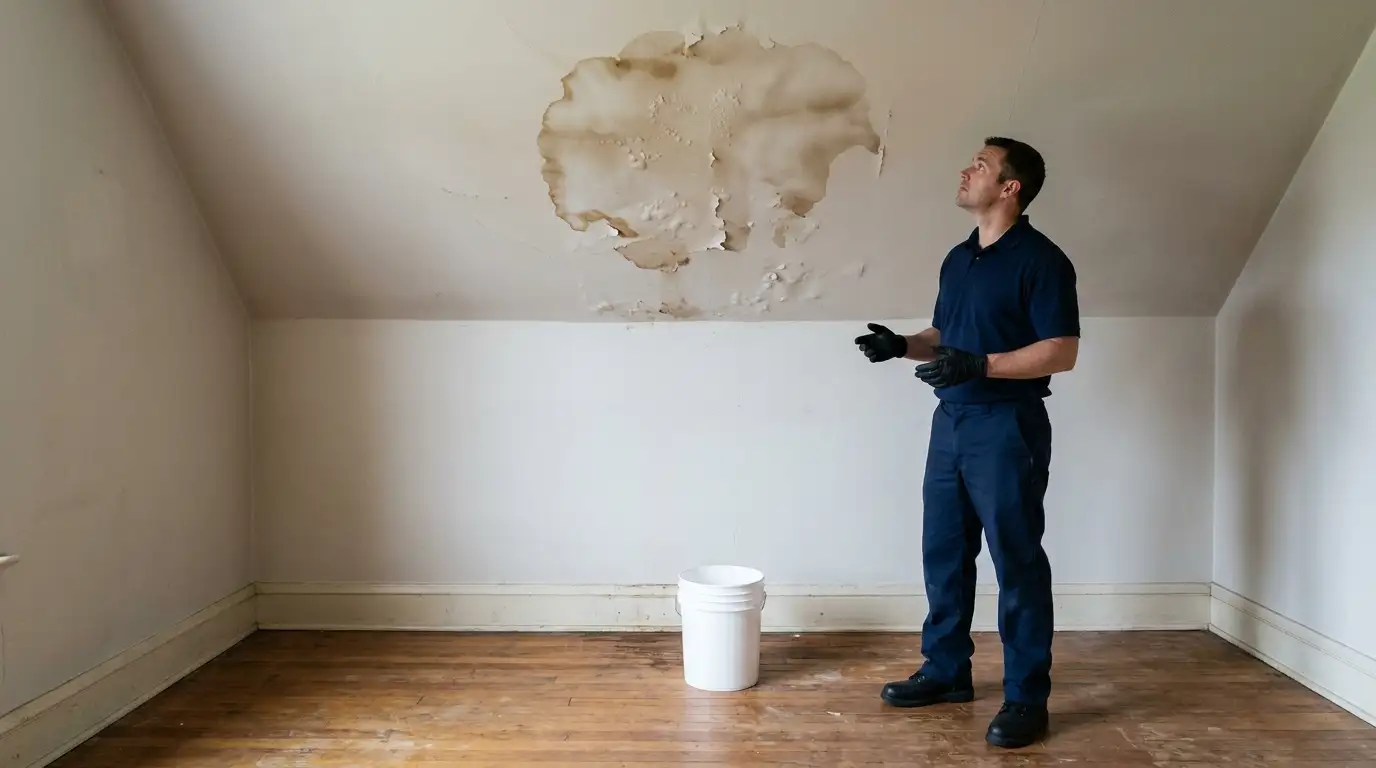
- Peeling paint, bubbling wallpaper, or sagging drywall
- Wet or compressed insulation in the attic
- A musty smell that returns after rain
- Visible daylight or damp wood in the attic
What to do right away
- Protect people first. Stay away from sagging or bulging ceilings, since they can hold a large amount of water and may collapse.
- Do not go onto a wet or damaged roof. Leave roof work to professionals.
- Contain the water. Place buckets or containers under drips, and use towels to protect floors.
- Move belongings. Shift furniture, electronics, and valuables out of the way.
- Watch for electrical hazards. If water is dripping through light fixtures or near outlets, avoid them and switch off power from a dry location if it is safe.
- Photograph everything. Capture the leak, the damage, and the storm conditions if you can.
- Call for help. Contact a roofer for temporary protection and a restoration company for drying.
Temporary protection
Roofers can often install a tarp or temporary patch to stop more water from entering. Keep receipts for these steps, since many policies expect you to take reasonable steps to prevent further damage and may reimburse them. In multi-unit buildings, tell your property manager or board right away so the building can protect the roof and coordinate repairs for all units.
What not to do
- Do not ignore a small stain. It often signals a much larger problem.
- Do not climb on the roof during or after a storm.
- Do not discard damaged materials before photographing them.
- Do not wait for the weather to clear before calling for drying.
- Do not cover wet insulation or drywall with paint or panels.
Hidden moisture in attics and insulation
Insulation soaks up water and holds it against framing and drywall for a long time. Wet insulation loses much of its value and can support mold, so it often needs to be removed and replaced. Moisture can also travel along wires and into wall cavities. A restoration team uses moisture meters and thermal cameras to find wet areas that are not visible, so they can dry or remove what is necessary and leave the rest.
How restoration works after a roof leak
- Assessment: Technicians trace the water path and map moisture in ceilings, walls, and floors.
- Extraction: Standing water is removed from floors and low areas.
- Removal: Saturated insulation, drywall, and other materials that cannot be dried are removed.
- Drying: Air movers and dehumidifiers dry the affected areas until readings are normal.
- Mold prevention: Fast drying and antimicrobial treatments help limit growth.
- Coordination and documentation: The team works with your roofer and prepares reports for your insurer.
Flat roofs and older buildings in Hoboken
Many brownstones and older masonry buildings in Hoboken have flat or low-slope roofs with parapets, drains, and membrane coverings. These roofs depend on clear drains and intact seams, and they can leak at corners, drains, and where the roof meets walls. Because buildings are close together and often share walls, one leak can affect neighboring units. Regular inspections, clear drains, and prompt repairs help prevent larger losses.
Insurance considerations
Sudden storm damage from wind, hail, or a fallen tree is often covered, and policies commonly cover resulting interior water damage. Damage from long-term wear, neglect, or poor maintenance is usually excluded. Report the loss quickly, keep photos and receipts, and ask your insurer about your deductible and about coverage for temporary repairs. Documentation from your restoration team can help show what happened and what was done.
How to prevent roof and storm leaks
- Have the roof inspected twice a year and after major storms.
- Keep gutters, downspouts, and roof drains clear.
- Trim branches that overhang the roof.
- Repair loose shingles, cracked flashing, and failing sealant promptly.
- Check attic ventilation and insulation to help prevent ice dams.
- Know a reliable roofer and restoration contact before you need them.
Frequently asked questions
Can I wait for the rain to stop before I call? No. Water keeps spreading, and drying can begin even while repairs are being arranged.
Will insurance pay for roof repair? It depends on the cause and your policy. Sudden storm damage is often covered, while wear and tear usually is not.
Can mold grow after a roof leak? Yes, in as little as 24 to 48 hours in damp conditions, so drying quickly is important.
When to call a professional
Call a roofer to stop the source and a restoration company to remove water and dry the structure. Acting fast limits damage, helps prevent mold, and supports your insurance claim.
How our team helps
Storm, roof, and window leaks can soak ceilings and insulation fast. We remove water, dry the structure, and help you document damage for insurance. Our Hoboken crews answer 24/7, find the source, and keep you updated until the property is dry and repaired.